


 Syndicate
Dotnetcat » .NET Books » Database books
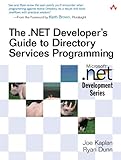
The .NET Developer's Guide to Directory Services Programming
|
Author: | Joe Kaplan |
| Publisher: | Addison-Wesley Professional (18 May 2006) | Price: |
“If you have any interest in writing .NET programs using Active Directory or ADAM, this is the book you want to read.”
—Joe Richards, Microsoft MVP, directory services
Identity and Access Management are rapidly gaining importance as key areas of practice in the IT industry, and directory services provide the fundamental building blocks that enable them. For enterprise developers struggling to build directory-enabled .NET applications, The .NET Developer’s Guide to Directory Services Programming will come as a welcome aid.
Microsoft MVPs Joe Kaplan and Ryan Dunn have written a practical introduction to programming directory services, using both versions 1.1 and 2.0 of the .NET Framework. The extensive examples in the book are in C#; a companion Web site includes both C# and Visual Basic source code and examples.
Readers will
- Learn to create, rename, update, and delete objects in Active Directory…
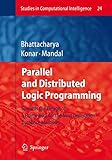
Parallel and Distributed Logic Programming: Towards the Design of a Framework for the Next Generation Database Machines (Studies in Computational Intelligence)
|
Author: | Alakananda Bhattacharya |
| Publisher: | Springer (18 August 2006) | Price: |
This book introduces the parallel and distributed approach to logic programming, examining existing models of distributed logic programming, and proposing an alternative framework for distributed logic programming using extended Petri nets. The hardwired realization of the Petri net based framework is presented in detail, and principles of mapping of a logic program on to the proposed framework are outlined. Finally, the book explores the scope of Petri net models in designing next-generation deductive database machines.
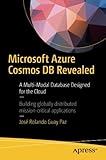
Microsoft Azure Cosmos DB Revealed: A Multi-Model Database Designed for the Cloud
|
Author: | José Rolando Guay Paz |
| Publisher: | Apress (18 January 2018) | Price: |
Tagline: Building globally distributed mission-critical applications
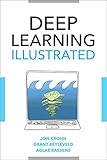
Deep Learning Illustrated: A Visual, Interactive Guide to Artificial Intelligence (Addison-Wesley Data & Analytics Series)
|
Author: | Jon Krohn |
| Publisher: | Addison-Wesley Professional (28 July 2019) | Price: |
Deep learning is one of today’s hottest fields. This approach to machine learning is achieving breakthrough results in some of today’s highest profile applications, in organizations ranging from Google to Tesla, Facebook to Apple. Thousands of technical professionals and students want to start leveraging its power, but previous books on deep learning have often been non-intuitive, inaccessible, and dry. In Deep Learning Illustrated , three world-class instructors and practitioners present a uniquely visual, intuitive, and accessible high-level introduction to the techniques and applications of deep learning. Packed with vibrant, full-color illustrations, it abstracts away much of the complexity of building deep learning models, making the field more fun to learn and accessible to a far wider audience.
Part I’s high-level overview explains what Deep Learning is,…
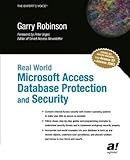
Real World Microsoft Access Database Protection and Security
|
Author: | Garry Robinson |
| Publisher: | Apress (11 November 2003) | Price: |
Security issues for all versions of Access from 97 to 2003 are discussed and the merits of each security approach from both the perspective of the developer and the database administrator/manager are examined.
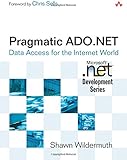
Pragmatic ADO.NET: Data Access for the Internet World
|
Author: | Shawn Wildermuth |
| Publisher: | Addison-Wesley Professional (15 November 2002) | Price: |
Provides developers with an introduction to ADO.NET, and gives practical solutions for using it effectively. Part of the Microsoft .NET Development series, this book demonstrates how to use ADO.NET to interact with databases and the rest of the .NET framework. It is useful for the developers looking to gain a working knowledge of ADO.NET.
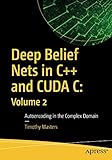
Deep Belief Nets in C++ and CUDA C: Volume 2: Autoencoding in the Complex Domain
|
Author: | Timothy Masters |
| Publisher: | Apress (11 June 2018) | Price: |
Discover the essential building blocks of a common and powerful form of deep belief net: the autoencoder. You’ll take this topic beyond current usage by extending it to the complex domain for signal and image processing applications. Deep Belief Nets in C++ and CUDA C: Volume 2 also covers several algorithms for preprocessing time series and image data. These algorithms focus on the creation of complex-domain predictors that are suitable for input to a complex-domain autoencoder. Finally, you’ll learn a method for embedding class information in the input layer of a restricted Boltzmann machine. This facilitates generative display of samples from individual classes rather than the entire data distribution. The ability to see the features that the model has learned for each class separately can be invaluable.
At each step this book provides you with intuitive motivation, a summary of the most important equations relevant to the topic,…
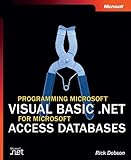
Programming Microsoft® Visual Basic® .NET for Microsoft Access Databases (Developer Reference)
|
Author: | Rick Dobson |
| Publisher: | Microsoft Press (19 January 2003) | Price: |
The Microsoft® .NET Framework represents an exciting new world for developers who work with Microsoft Access, Visual Basic®, and Visual Basic for Applications. This book provides complete, practical details on how to take advantage of this world by building or upgrading Access-based client applications with Visual Basic .NET. It gives you specific instructions about how the .NET Framework pertains to Access development. Then it explores programming with Visual Basic .NET and ADO.NET, and it puts it all together with examples and code samples that show how to develop robust Web applications and services with these tools.
Topics covered include:
- What’s in the Microsoft .NET Framework for Access developers
- Getting started with Visual Basic .NET and Microsoft Visual Studio® .NET
- Visual Basic.NET techniques for data types, procedures, loops, arrays, classes, class inheritance, event processing, structured exception handling, and file…